English
Piece of Mind
Open search engine
Search
Close search engine Clear Search
Products in the cart: 0. See details

Your cart is empty

Our puzzles are made in the European Union using eco-friendly, plastic-free materials and matte, dust-free finishes. We create puzzles not just as products, but as a calming experience that helps reduce stress, improve focus, and support digital detox in everyday life.

Premium jigsaw puzzles vs cheap ones – is it worth paying extra? Find out the differences

Not all jigsaw puzzles are the same. Find out how premium jigsaw puzzles differ from cheaper ones, and why quality matters when it comes to the enjoyment of putting them together.

Premium jigsaw puzzles vs cheap ones – is it worth paying extra? Find out the differences

Are premium jigsaw puzzles really any different from cheap ones? At first glance – not necessarily. They all look similar: the picture, the pieces, the box. But the difference becomes apparent the moment you sit down to put them together. And that’s when it’s decided whether it will be relaxing… or frustrating.

🧩 Cheap vs premium jigsaw puzzles – where does the difference lie?
Jigsaw puzzles differ not only in price, but above all in:

the quality of the materials
the precision of the cut
the surface finish
the user experience
It’s a bit like a book – you can read the same content on thin, rough paper or in a well-produced copy that simply ‘reads well’.

🔍 Key differences – step by step
1. Piece fit
In premium jigsaw puzzles:

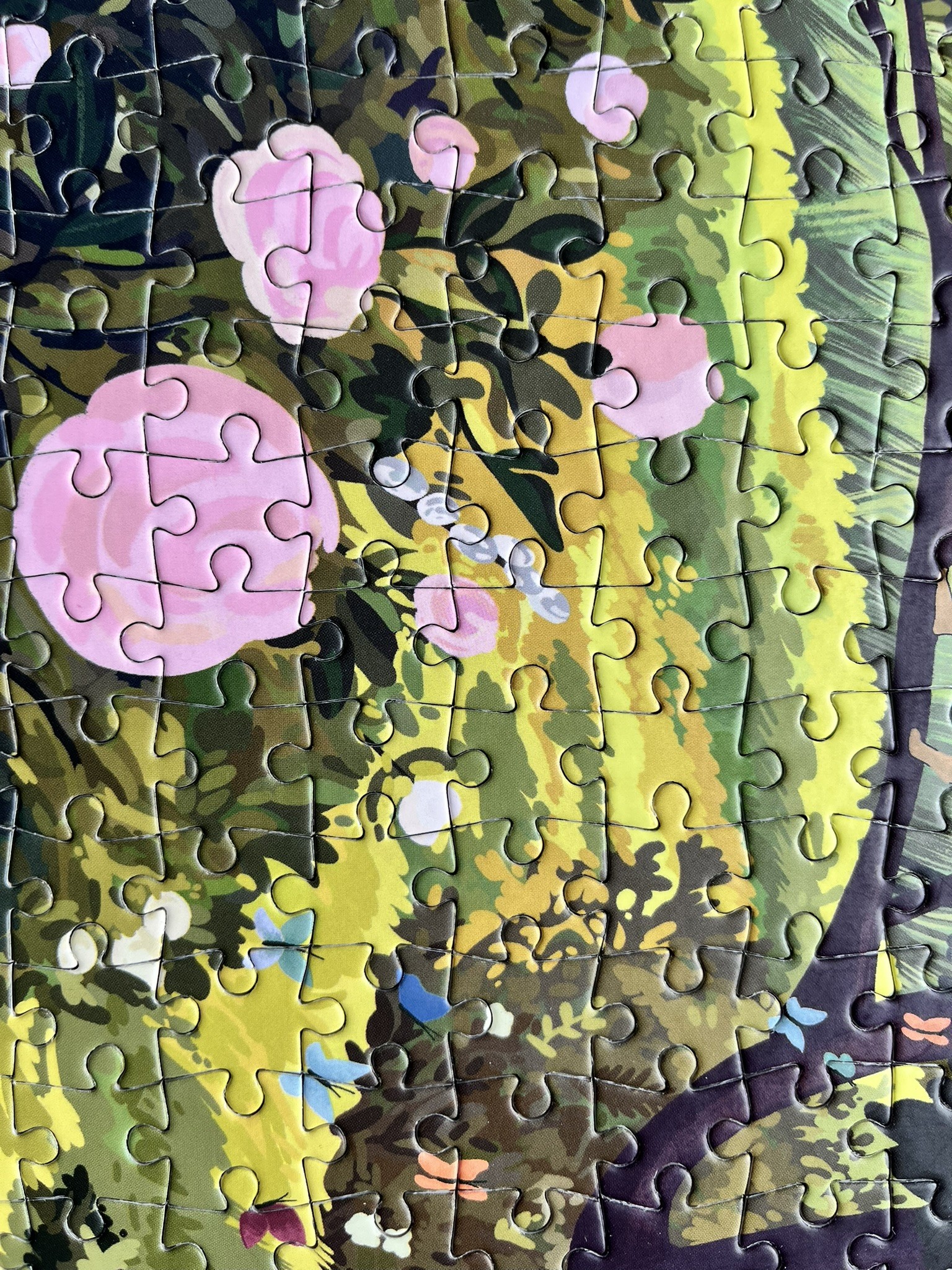
the pieces fit perfectly
you don’t have to ‘guess’ whether something fits
the whole thing holds together securely
In cheap jigsaw puzzles:

the pieces can be loose
there are sometimes imprecise cuts
assembling them can be less intuitive
👉 This is one of the things that most affects comfort.

2. Cardboard quality and durability
Premium jigsaw puzzles:

thicker, stiffer cardboard
resistance to bending
greater durability with repeated use
Cheap jigsaw puzzles:

thinner material
more prone to damage
shorter lifespan

3. Surface – matt or glossy?
It’s a small detail that makes a huge difference.

Premium jigsaw puzzles:

matt surface
no light reflections
better visibility of details
Cheap jigsaw puzzles:

often glossy
reflect light
can strain the eyes


4. Puzzle dust
Cheaper jigsaw puzzles often contain:

fine cardboard dust in the box
In premium jigsaw puzzles:

minimal or no dust
👉 This matters, especially if you want an aesthetic, enjoyable experience.

5. Overall jigsaw experience
And this is where the biggest difference lies.

Premium jigsaws:

smooth assembly
greater focus
genuine relaxation
Cheap jigsaws:

more frequent distractions
moments of frustration
less satisfaction
🧠 Why does quality matter?
A jigsaw isn’t just a product.
It’s an experience.

If something:

doesn’t fit perfectly
distracts you
irritates you
👉 it ceases to be a way to relax.

That’s why more and more people are choosing premium jigsaw puzzles for adults – not just for the price, but for the quality of the time they spend with them.

💸 Is it worth paying extra for premium jigsaw puzzles?
It depends on what you’re looking for.

If:

you do jigsaw puzzles only occasionally
minor imperfections don’t bother you
👉 cheaper jigsaw puzzles may be sufficient

But if:

you see jigsaw puzzles as a way to unwind
you value aesthetics and quality
you want to truly relax
👉 premium jigsaw puzzles will definitely be a better choice

🧩 Who are premium jigsaw puzzles for?
Premium jigsaw puzzles are best suited to people who:

want to relax after work
are looking for an alternative to screens
enjoy aesthetically pleasing, well-crafted products
see jigsaw puzzles as a form of ‘me-time’
🔗 How to choose the right jigsaw puzzle?
If you’re just starting out, read also:
👉 Which jigsaw puzzle should you choose to start with? 500 or 1000 pieces

This will help you choose a difficulty level that suits your needs.

✨ Summary
At first glance, jigsaw puzzles may look the same.
But in practice, the difference is noticeable from the very first piece.

Premium jigsaw puzzles:

fit together better
are less distracting
are more satisfying
And the time you spend on them is truly quality time.


❓ FAQ – premium vs budget jigsaw puzzles


Are premium jigsaw puzzles worth the price?
Yes, if you value comfort, quality and the enjoyment of putting them together.


Should beginners choose premium jigsaw puzzles?
Yes – the pieces fit together well, making it easier to get started and reducing frustration.


Are cheap jigsaw puzzles bad?
No, but they offer a less comfortable experience.


Does the quality of a jigsaw puzzle affect relaxation?
Yes – the better the quality, the easier it is to focus and unwind.
recent articles

  • Puzzle therapy: why focusing on pieces calms the mind

    Life can feel overwhelming at times. Endless notifications, busy schedules, and constant streams of information leave many of us searching for ways to slow down and regain a sense of calm. While puzzles are often seen as a simple pastime, many people describe them as something more. For them, puzzling becomes a form of "puzzle therapy"—a quiet, focused activity that helps reduce mental clutter and create space for relaxation. But why does concentrating on hundreds of small pieces feel so calming?

    The answer lies in the way puzzles engage our attention, our hands, and our minds.

    Read more
  • Jigsaw Puzzles as a Form of Meditation

    When people think of meditation, they often imagine sitting quietly with closed eyes, focusing on the breath. While traditional meditation can be a powerful practice, it is not the only way to cultivate mindfulness and calm. For many people, meditation happens through movement, creativity, or focused attention. Gardening, knitting, painting, and even walking can create a meditative state. Jigsaw puzzles belong in this category too. Piece by piece, puzzles invite us to slow down, focus on the present moment, and temporarily step away from the noise of everyday life.

    Read more
  • What Is Slow Living and Why Does It Matter Today?

    In a world that often celebrates busyness, productivity, and constant connectivity, more people are searching for a different way of living. A way that values quality over quantity, presence over speed, and meaning over endless activity. This is the essence of slow living—a lifestyle that encourages us to be more intentional with our time, attention, and energy.

    But what does slow living actually mean, and why is it becoming increasingly relevant today?

    Read more
  • Why Analog Hobbies Are Making a Comeback

    A decade ago, it seemed that technology would replace many traditional hobbies. Smartphones, streaming platforms, and social media offered endless entertainment at our fingertips. Yet today, more people are returning to puzzles, books, drawing, knitting, and other offline activities. Why are analog hobbies becoming popular again?

    Read more
  • 7 Best relaxing hobbies after work

    After a busy workday, many people look for simple ways to unwind, reset their mind, and restore balance. It does not always require big lifestyle changes—often, small calming activities are enough to slow down and reconnect with yourself. Here are 7 relaxing hobbies that help you truly switch off after work.

    Read more
  • Why puzzles are a form of mindfulness?

    When people think about mindfulness, they often imagine meditation, breathing exercises, or yoga. Yet mindfulness can also be found in simple everyday activities. One of them is doing a jigsaw puzzle. No special equipment, no complicated techniques, and no pressure to perform. Just a table, a few quiet moments, and the next piece waiting to be found.

    Read more

    FAQ – Product Questions

    1. 🧩 Are the puzzles suitable for children?

    Our puzzles are primarily designed for adults and older teens due to their complexity, but older children may also enjoy them with supervision. Puzzle 1000 elementów będą natomiast bardziej wymagające i najlepiej sprawdzą się u dorosłych lub bardzo zaawansowanych młodszych użytkowników. Nasze produkty nie są odpowiednie dla dzieci w wieku poniżej 3 lat. Zawierają małe elementy, które mogą być połknięte.

    2. 🧩 What is the difference between 500 and 1000 piece puzzles?

    The main difference is difficulty and time required. 500-piece puzzles are quicker and easier to complete, while 1000-piece puzzles offer a longer, more immersive experience.

    3. 🧩 Do the puzzles produce dust?

    No, our puzzles are designed to be dust-free thanks to high-quality cutting and eco-friendly materials.

    4. 🧩 Do the puzzle pieces reflect light?

    No, the surface has a matte finish that reduces glare and makes the puzzle comfortable to work with under different lighting conditions.

    5. 🧩 What are the puzzles made of?

    Our puzzles are made from high-quality, eco-friendly cardboard produced in Europe. They are plastic-free and designed with sustainability in mind.

    6. 🧩 Are these puzzles a good gift idea?

    Yes, puzzles make a thoughtful and meaningful gift for anyone who values relaxation, mindfulness, and slow living experiences.

    7. 🧩 How long does it take to complete a puzzle?

    It depends on the size and experience level. A 500-piece puzzle may take a few hours, while a 1000-piece puzzle can take several sessions or days.

    8. 🧩 Can puzzles be assembled more than once?

    Yes, our puzzles are designed for multiple uses. With careful handling, they can be enjoyed many times.