Jigsaw puzzles seem simple – they consist of cardboard pieces that together form a picture. However, behind each set lies a surprisingly complex manufacturing process. It is a combination of art, technology and paper engineering.
- Graphic design and preparation for printing
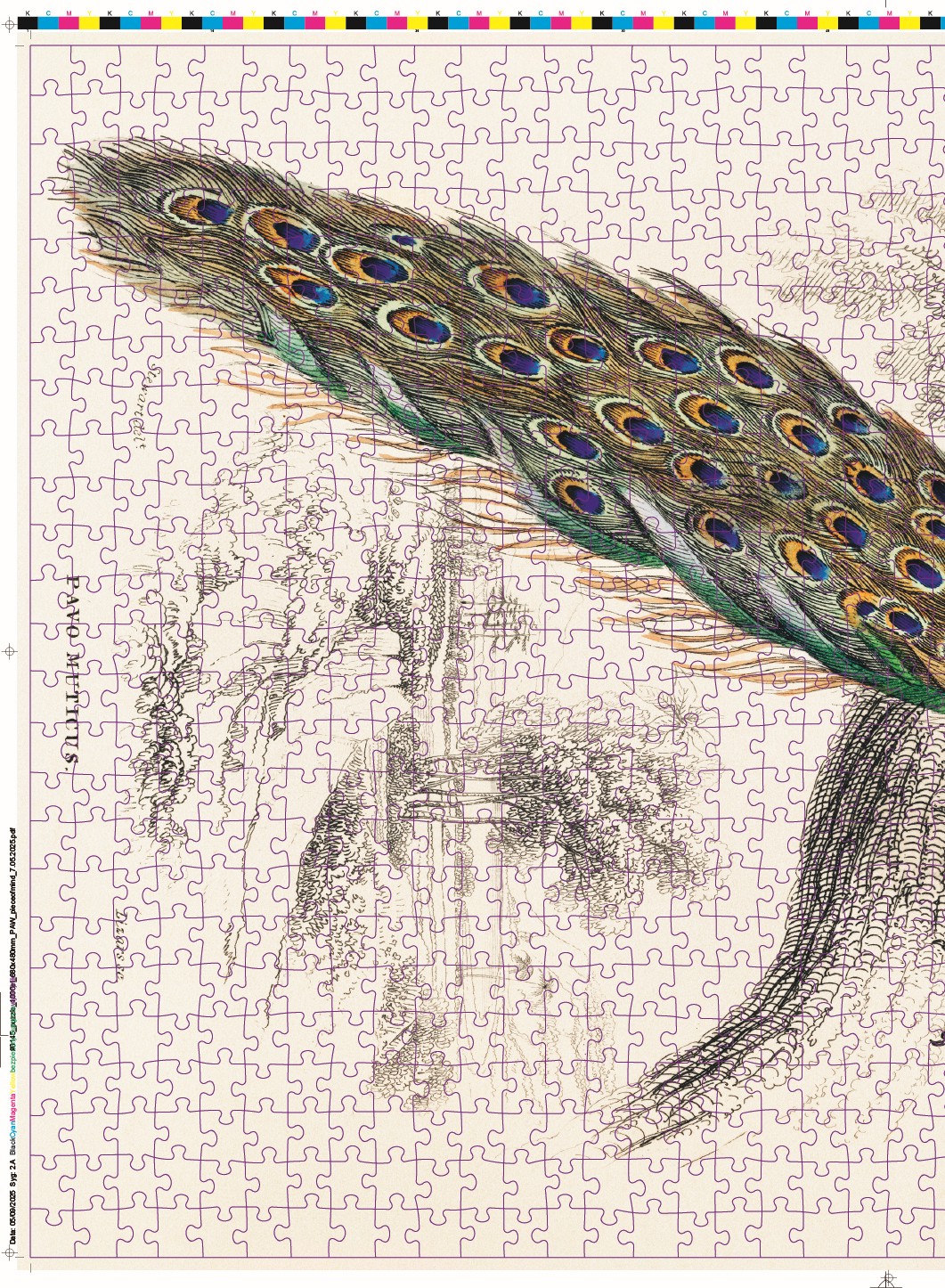
The first step is to select an image and process it before printing, which means adapting the files for printing. The graphics must be properly adapted to the cutting lines so that no important elements are located where the puzzle pieces will be separated.
Colours are also converted to the CMYK system so that the colours after printing accurately reflect the original.
- Printing – offset and water-based inks
The motif is printed on coated paper (usually 120–150 g/m²) using offset printing. Why? Because offset printing ensures high resolution, intense colours and even ink coverage.
Water-based or UV-curable inks are increasingly being used, as they are more environmentally friendly and more resistant to abrasion.
- Lamination – combining print with cardboard
The printed sheet goes into a laminator, which uses rollers and water-based glue to bond it to the puzzle cardboard. Lignin cardboard or MDF puzzle board with a thickness of 1.5–2 mm is most commonly used.
This process is crucial for the durability of the puzzle and its resistance to bending. Relative humidity plays an important role here – if it is too high, the cardboard may warp, and if it is too low, it becomes brittle.
- Puzzle cutting – a steel ‘stamp’
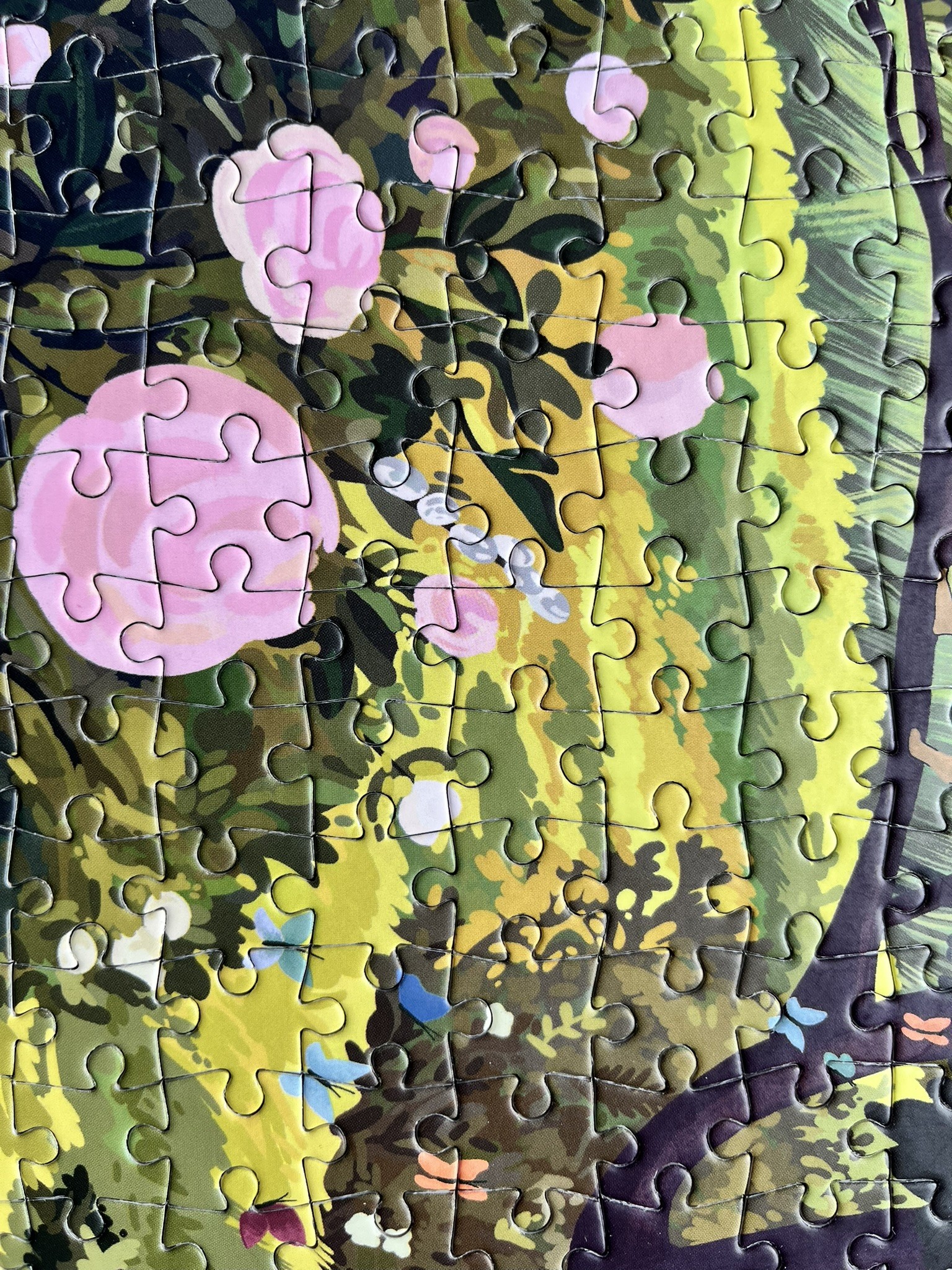
The most interesting part: cutting. A steel cutting die is used for this, which is hand-designed and machined from sharp-edged steel tape. Imagine a large cookie cutter that cuts out distinctive puzzle shapes instead of hearts.
Cutting takes place on a hydraulic press – the pressure can be as high as several hundred tonnes to perfectly cut through cardboard and paper.
Interesting fact: each die has a unique arrangement of ‘teeth’ and ‘tabs’, which means that no piece will fit into more than one place.
- Quality control and packaging
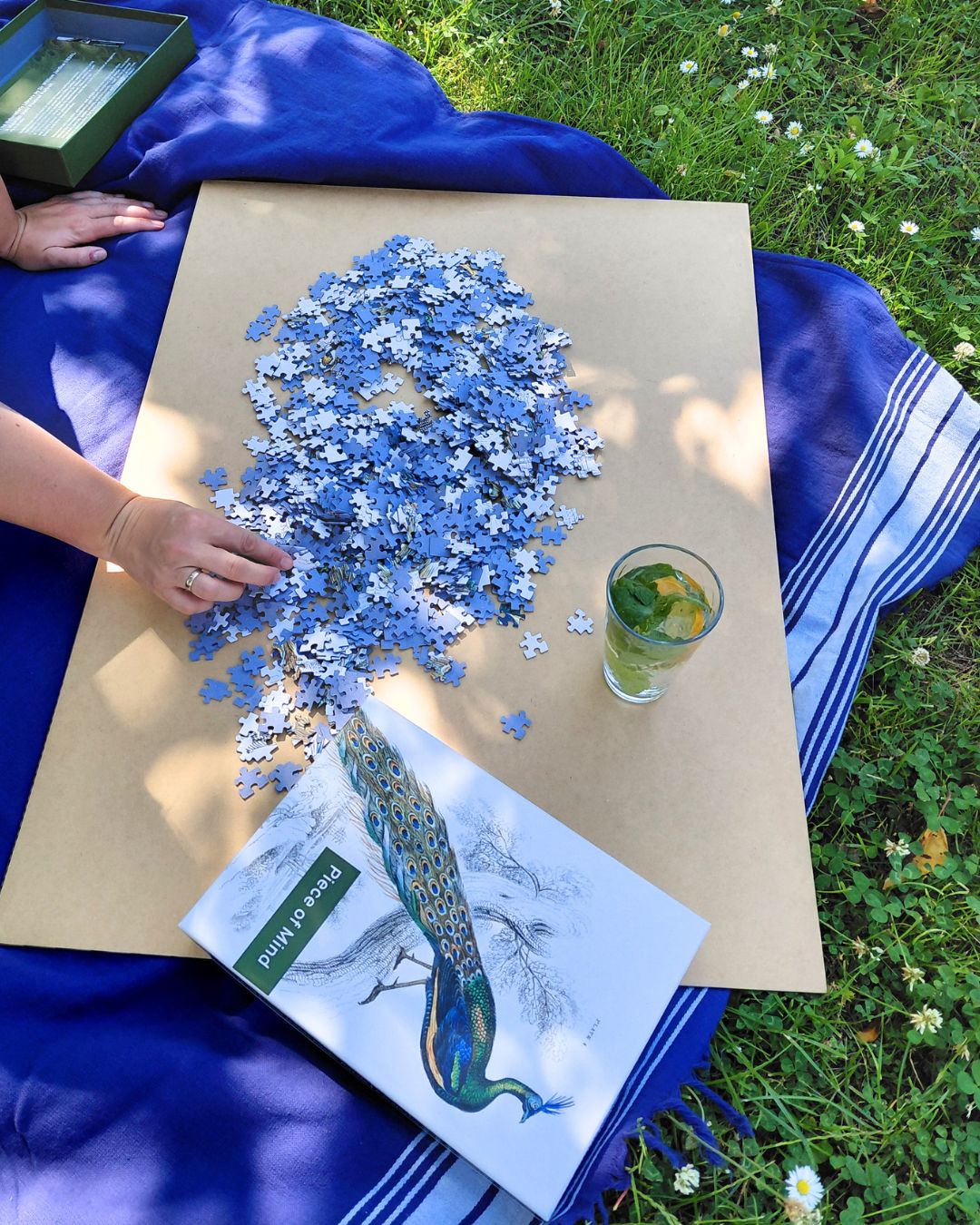
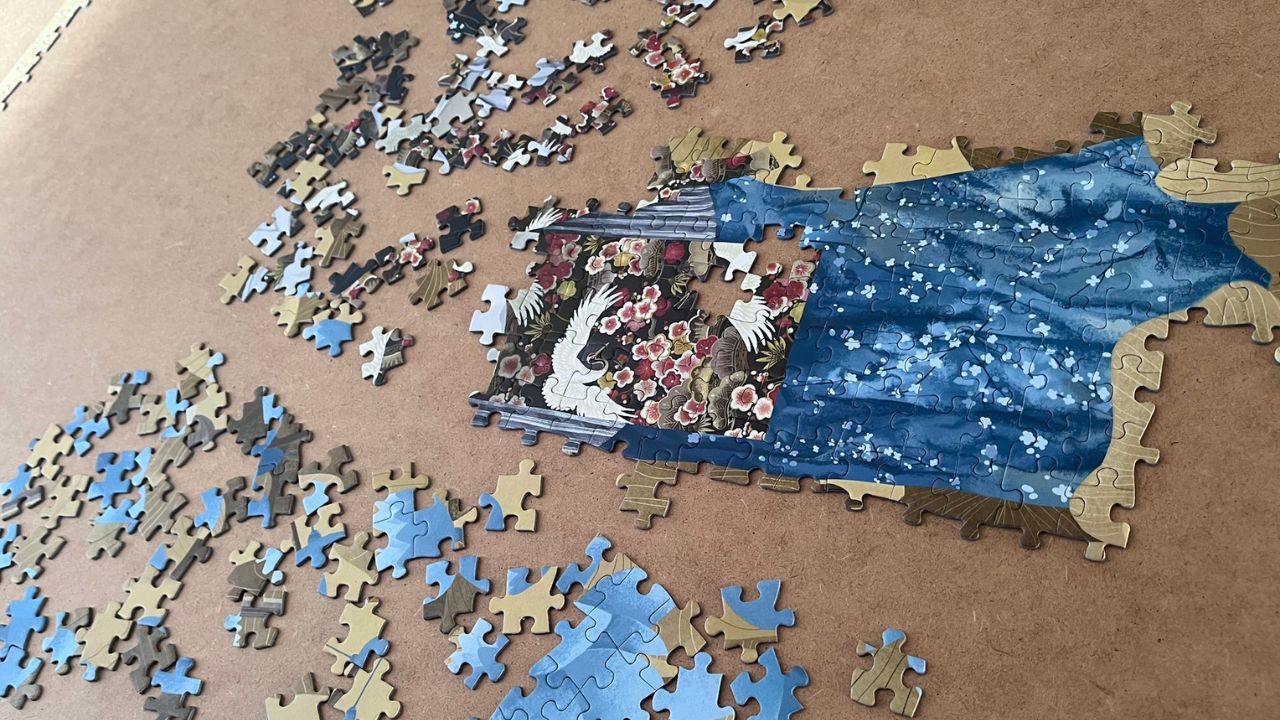
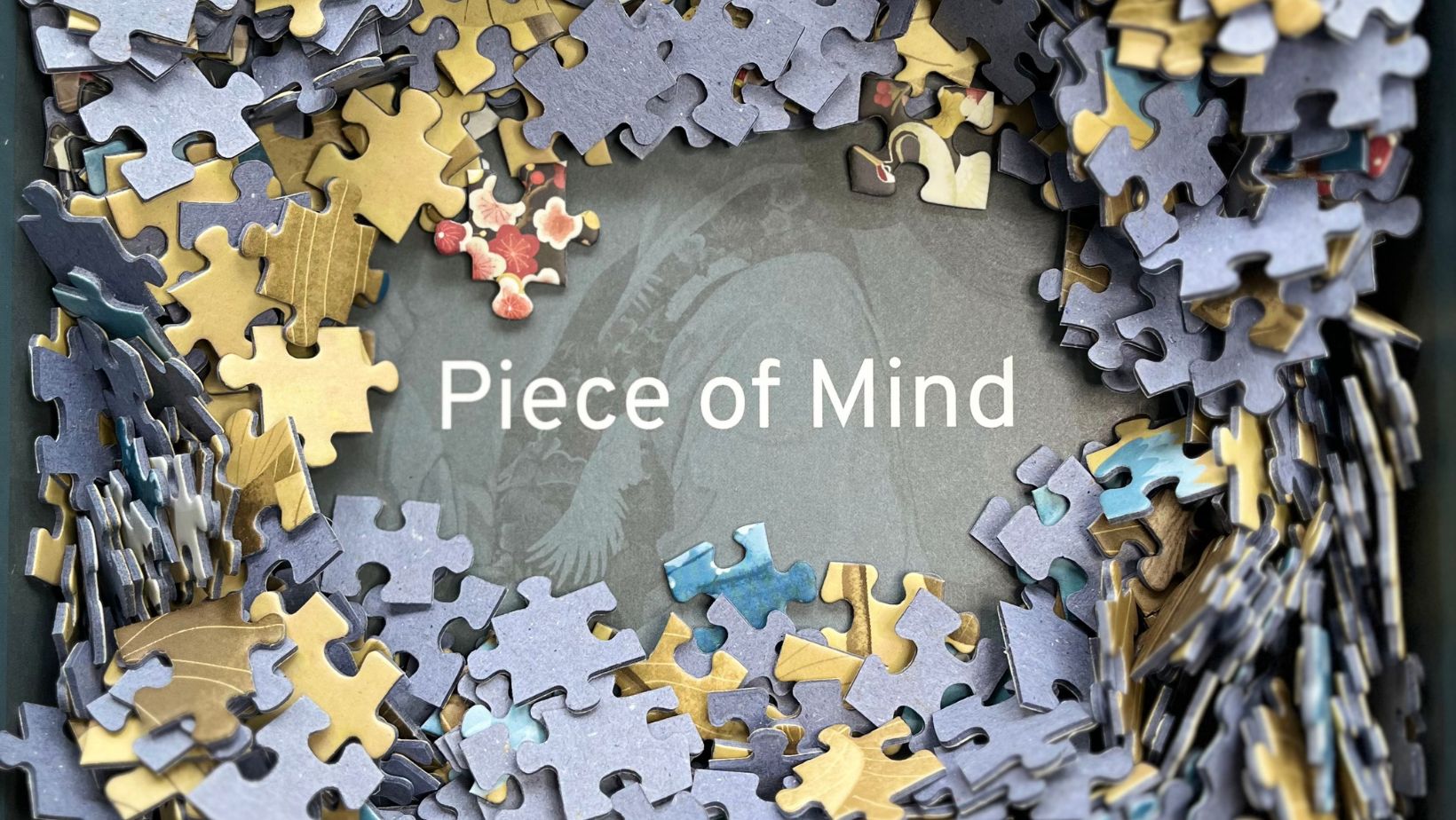
The finished sheets are scattered (separation of elements) and checked for clean cuts, without any protruding fragments.
Companies use both manual inspection and vision systems (cameras monitoring shapes and colours). This is crucial to ensure that no element is missing from the package.
- Packaging and branding
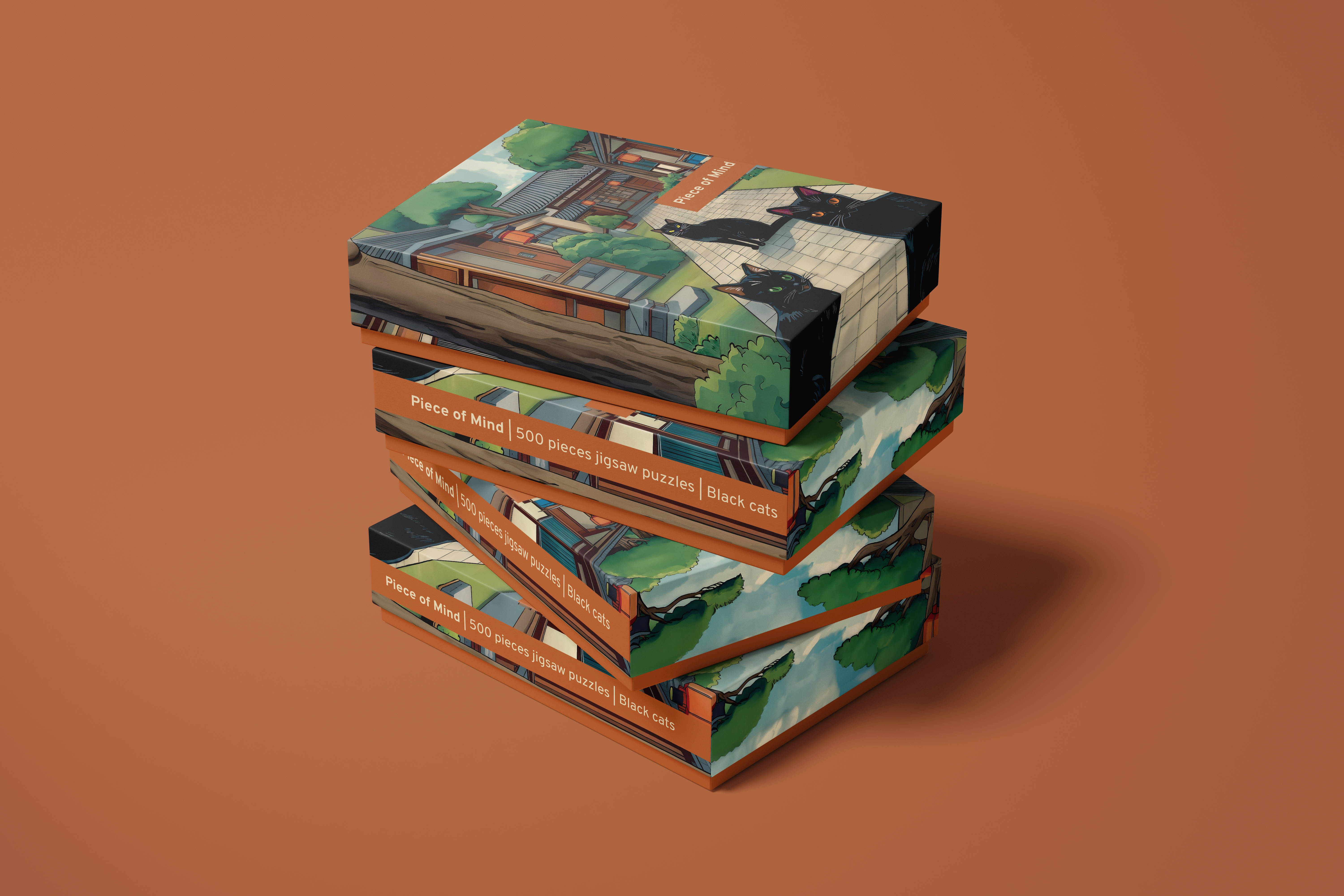
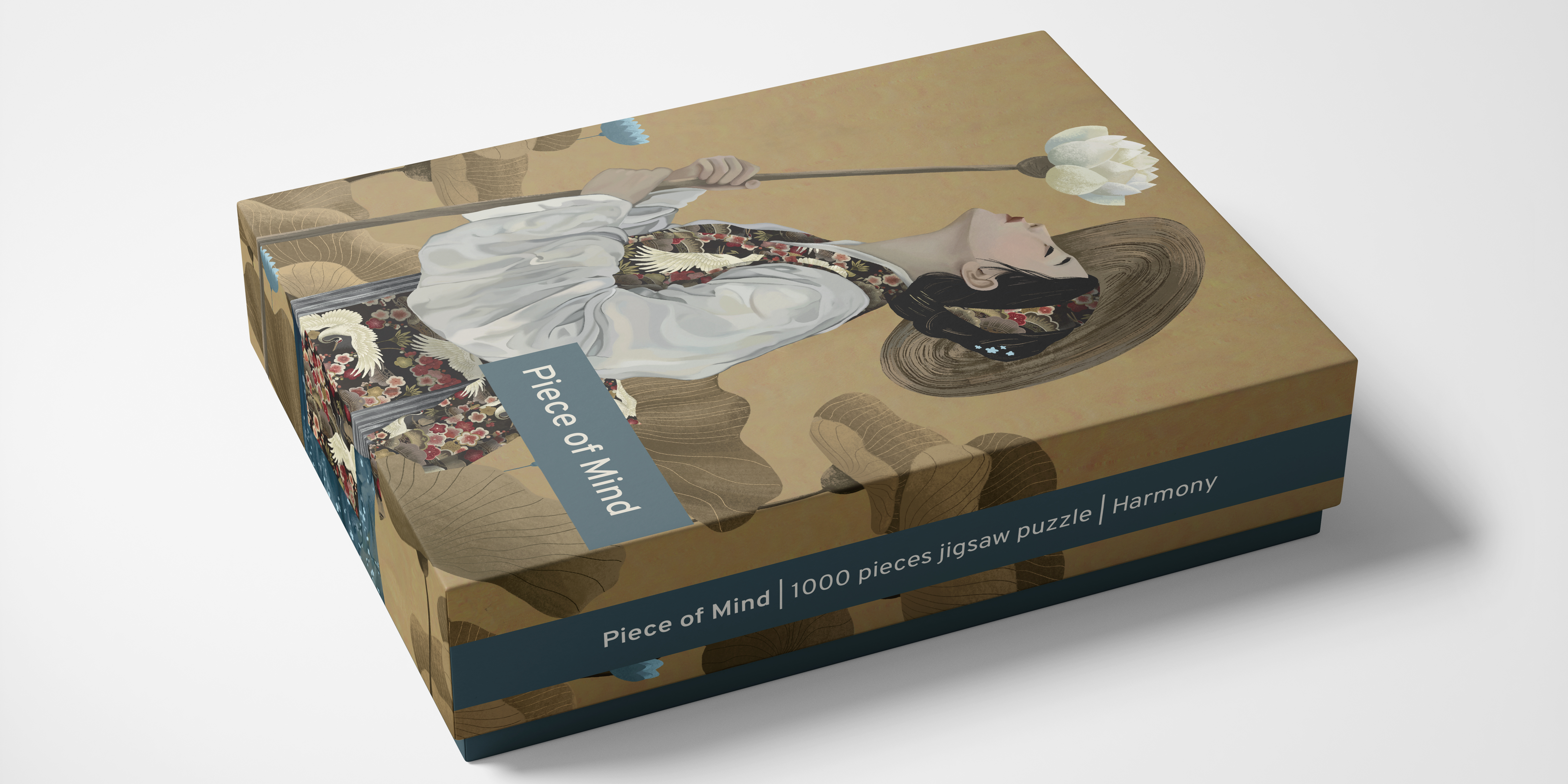
The puzzles are placed in a box made of solid or micro-flute cardboard, with offset or digital printing.
The whole thing is often wrapped in heat-shrink film, but this is increasingly being replaced by paper banding or, out of concern for the environment, not wrapped at all.
- Eco-friendly innovations
Modern puzzle brands are moving away from plastic, using FSC cardboard and applying matt anti-glare coatings. These are small changes that significantly improve the comfort of putting the puzzle together.
Puzzles – technology that brings joy
Puzzle production is a true blend of printing, materials engineering and precision craftsmanship. Every piece you hold in your hand has gone through hydraulic presses, steel cutting dies and a rigorous quality control process.
And then there is only one thing left to do: find the perfect place for it.